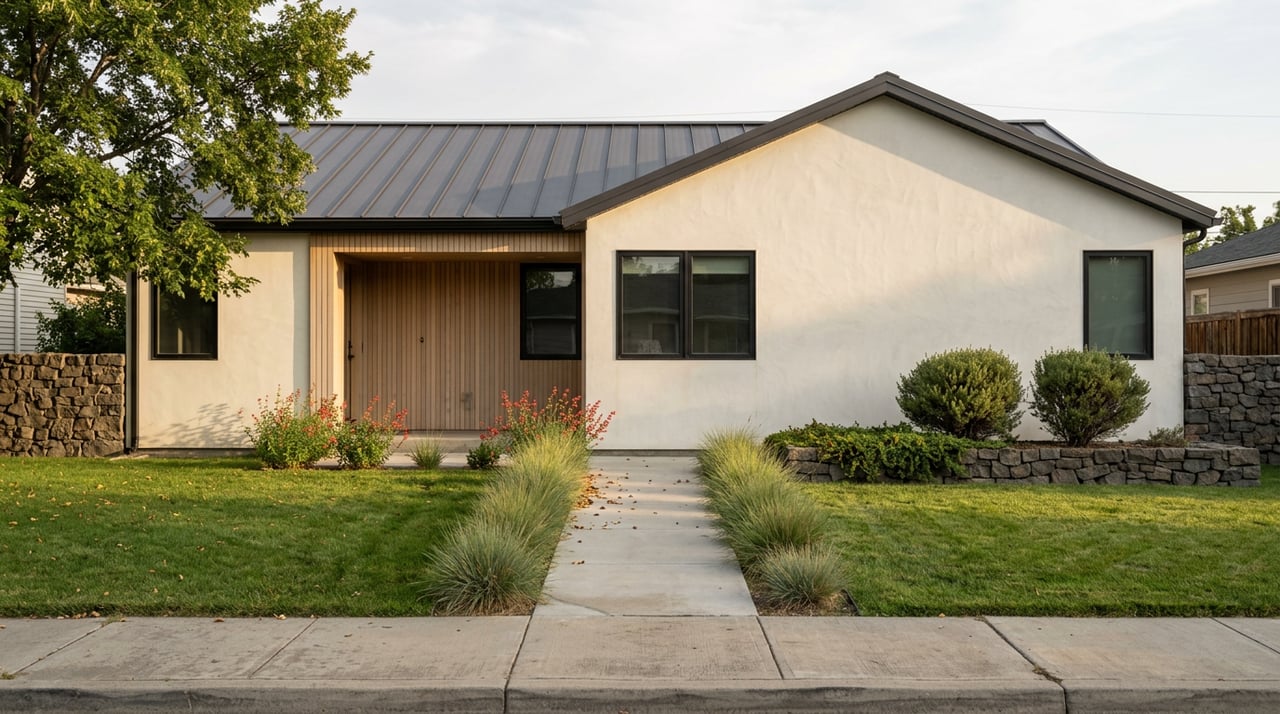
The Kennewick Water Bill That Has Nothing To Do With Your Lawn
August 13, 2026
August 13, 2026
Picture two buyers closing on homes three blocks apart in Kennewick. Same builder, same square footage, same year built. One family gets an annual irrigation bill that barely covers a tank of gas. The other gets a bill with an extra surcharge line that will not disappear for another six years. Neither buyer did anything wrong. Neither home has a defect. The difference has nothing to do with the house and everything to do with a decision made about pipe financing before either family ever looked at a listing.
This is the part of buying in Kennewick that rarely makes it into a walkthrough, a portal listing, or a national closing cost checklist. It shows up in one place: the Kennewick Irrigation District statement, and often not until the title company goes looking for it.
Most of Kennewick, along with a strip near the Richland line served through the Clearwater Creek service area, sits inside the boundary of the Kennewick Irrigation District, known locally as KID. The district delivers non-potable irrigation water pulled from the Yakima River, separate entirely from the municipal drinking water that shows up on a city utility bill. If your lot has KID water rights attached, you get a KID statement every year whether you use a drop of it or not.
The district's own numbers put this in scale. KID serves just over 20,200 acres inside a 55,000 acre boundary, with about 25,000 customer accounts on the books and a service area that has shifted from mostly farmland toward high density residential subdivisions as the Tri-Cities has grown. That shift matters more than it sounds. A canal system engineered for farmers who scheduled their water deliveries in advance is now serving suburban blocks that expect water on demand, and someone has to pay for the infrastructure that makes that possible.
Every parcel with an allotment pays a tiered base charge plus a flat 2026 line item: a New Water Infrastructure and Supply Fund charge of $5.92 per parcel plus $5.92 per acre. For 2026, the district approved an overall rate increase of about 2 to 3 percent depending on tier, according to its current rate schedule. On its own, that sounds like a modest, almost forgettable adjustment.
Set it against last year. In 2025, KID raised assessments between 8 and 18 percent depending on acreage, citing inflation, drought mitigation, and the cost of urbanization, according to local reporting at the time. The 2026 number is not a return to normal. It is a pause after a much sharper jump, and it tells you the base rate is only ever half the picture. The other half lives in a set of surcharges that only certain parcels carry, and those do not move at 2 to 3 percent a year. They are fixed dollar figures locked in for a term.
This is the mechanism that explains the two buyers from the opening scenario. Certain subdivisions and service pockets carry their own improvement district surcharges, layered on top of the base rate, tied to when the infrastructure serving that specific pocket was built and financed. Here is what the current schedule shows:
| Benefit Area or Surcharge | Amount | Term |
|---|---|---|
| Red Mountain Service Area, Capital Surcharge | $43.60 per acre | Ongoing |
| Red Mountain Service Area, Operating Surcharge | $45.29 per acre | Ongoing |
| Division IV 33.8 Transmission Surcharge | $229.61 per acre | 10 years, if not previously paid in full |
| Division IV 33.8-4 Distribution Surcharge | $307.44 per acre | 10 years, if not previously paid in full |
| Highland Gardens Benefit Area | $793.91 per Equivalent Irrigation Unit annually | 10 years, if not previously paid in full or deferred |
| Lorayne J Water Service Area | $643.33 annually | 10 years, if not previously paid in full |
| Clearwater Creek (former City of Richland customers) | Transitional rate, adjusting yearly | Through 2030 |
Every one of these is drawn from the district's 2026 rates and charges page. A parcel in Highland Gardens can owe nearly $800 a year beyond the base charge for a full decade, while a parcel two streets over with no benefit area attached pays only the standard tier. Highland Gardens even has a deferral option under Resolution 2020-38, letting an owner pay $120 a year instead and push the balance forward, which tells you the district expected some owners would need that flexibility.
The Clearwater Creek line deserves its own note. Customers there used to get irrigation water through the City of Richland rather than KID directly, and they are riding a transitional rate that adjusts annually until it lines up with standard KID pricing in 2030. A buyer moving into that pocket today is buying into a rate schedule still in motion, not a fixed number.
None of this is usually a problem until escrow. KID maintains a title company portal where an escrow officer types in a parcel number and pulls a payoff statement. The district is direct about the limits of that tool: if the parcel carries a surcharge or an active Local Improvement District loan, the automatic statement will not generate, and the title company has to request the figure manually. That is a delay nobody budgets into a closing timeline, and it is exactly the kind of thing an out-of-area buyer, or an agent who does not work KID parcels regularly, will not think to ask about until it stalls a file.
Standard purchase language in this market treats irrigation assessments the way it treats property taxes, prorated to the date of closing between buyer and seller. That is straightforward when a parcel has only the base rate. It gets more complicated when a remaining balance on a 10-year surcharge needs to be accounted for, since that is a future obligation attached to the land, not a bill that resets with a change of ownership.
One more distinction worth knowing before an offer goes in: some subdivisions have what KID calls a Private Line Area, meaning the irrigation piping inside that development was built by the property owners or the original developer rather than by the district. KID delivers water to a district-owned point at the edge of that system, but maintenance of everything past that point belongs to the property owners, not the district. A buyer who assumes KID handles every foot of pipe on the lot may be assuming wrong.
Here is the part that surprises almost everyone who asks about it. Ripping out turf, switching to drought tolerant planting, or simply watering less will not lower the annual KID assessment. The district is direct on this point in its own FAQ: the charge is tied to the parcel, not to consumption, because it funds the operation and maintenance of the canals and pipes regardless of how much water any single household actually draws through them.
That flat structure also means a dry year does not shrink the bill, even though it can shrink the water. During the 2024 to 2025 drought, junior and proratable water users saw curtailment levels of roughly 47 to 48 percent, while senior rights holders were shielded by priority. The assessment kept coming either way, because it pays for the system itself, not the gallons that moved through it in a given season.
Is the KID assessment the same as my city water bill? No. City water is metered drinking water billed by whichever municipality serves the address. KID delivers separate, non-potable irrigation water and bills it once a year based on parcel and acreage, not usage.
Does every home in Kennewick have this charge? No. Only parcels with an irrigation allotment inside the district boundary receive a KID statement. Homes outside the boundary, or those without an allotment, will not see this line item at all.
Can I find out what a specific address owes before making an offer? Yes. The district's title company portal generates a summary statement by parcel number for standard accounts, and a direct call to KID customer service can clarify anything the portal cannot produce automatically, including active surcharges or LID balances.
A house is easy to compare on square footage and finishes. What it costs to hold onto every year is a quieter number, and in this part of Kennewick, it depends on decisions made about pipes long before the home was ever listed. If you are comparing properties across KID's service area and want the real annual number, not just the base rate, Caroline Couture can help you read a parcel's full assessment history before you write an offer, not after you're already in escrow.
Stay up to date on the latest real estate trends.
We bring together a mix of integrity, imagination and an inexhaustible work ethic, striving to make each buying and selling experience the best possible. Contact us today to discuss all your real estate needs!