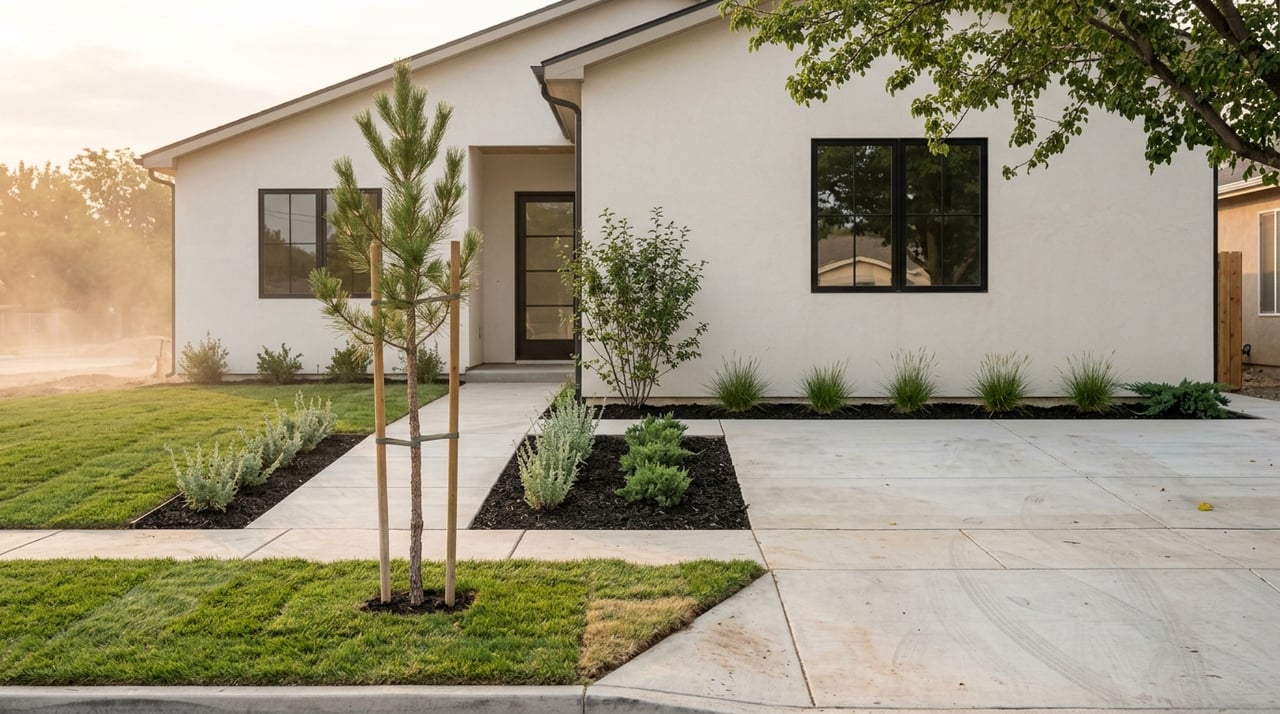
Why the Same New Kennewick Home Costs More If It's Built in Southridge
August 27, 2026
August 27, 2026
Ask a builder for a quote on the same 1,800-square-foot floor plan on two different Kennewick lots and you might get two different base prices before a single finish is chosen. One lot sits in Southridge, off Highway 395. The other sits closer to downtown. Same plan, same square footage, same garage. Different number on the page.
The gap isn't a builder's markup or a guess about what the neighborhood will bear. It's a fee the City of Kennewick charges before the foundation is poured, and the amount depends entirely on where in the city you're building. For anyone comparing new construction across Kennewick's growth areas this year, that fee is worth understanding, because it explains part of a price pattern that otherwise looks arbitrary.
Kennewick charges a Transportation Impact Fee, or TIF, on new development. The idea is straightforward: new construction adds traffic, and the fee is meant to fund the road capacity that traffic requires. The city adopted its first TIF in 2015, making Kennewick the last of the Tri-Cities to do so, and amended it in 2018 to split the fee by location rather than charge one flat citywide rate.
That 2018 change created four zones, and the zones don't charge the same amount. According to the city's own January 2026 fee schedule, a single-family home built in the Southridge district (District 1) carries a Transportation Impact Fee of $1,721.61 this year, calculated from a $1,138.79 rate per new PM peak-hour trip. A home built downtown pays a fraction of that. The most recent published comparison of Kennewick's four zones, compiled in 2025, put Southridge at $1,692, Vista Field at $1,108, the balance of the city at $1,267, and downtown at $434. The ratio has held steady even as the dollar amounts tick up year to year: Southridge runs roughly four times what downtown pays for the identical single-family unit.
The logic isn't hidden. It's written into the city's own code: new growth is supposed to pay a proportionate share of the infrastructure it requires. Southridge is where nearly all of that growth is happening, so Southridge pays more.
The transportation fee isn't the only one specific to that part of the city. In 2025, the Kennewick City Council voted 5-2 to approve a separate fire impact fee that applies only within the Southridge boundary, adding nearly $800 to the cost of a single-family building permit there. The fee funds a new $15 million fire station, Station 6, planned for Bob Olson Parkway in the middle of the district it will serve. The vote on the fee rates themselves passed by an even narrower 4-3 margin, and city officials have said calls for service in the area are projected to reach roughly 1,000 annually once the station is operational, targeted for 2027.
Stack the two fees together and a Southridge single-family home carries roughly $2,500 in city-assessed costs that a comparable home built downtown simply does not. That's before lot premiums, before upgraded finishes, before anything a buyer would see on a walkthrough. It's a cost decided by geography, assessed at the permit counter, and rolled into what the builder ultimately charges.
The reasoning isn't punitive. It's an attempt to keep existing residents from subsidizing new development through higher taxes or slower emergency response, which is the argument the city made when it approved the Southridge fire fee. Development that creates new demand pays for the services that demand requires, rather than spreading that cost evenly across a city where most of the growth is concentrated in one corner.
And Southridge really is where the growth is concentrated. Kennewick's population sits around 90,000 today and is projected to reach somewhere between 108,000 and 109,000 over the next twenty years, according to the city's Community and Economic Development Director, Anthony Muai, who told local reporters this month that "there's a lot of growth going on in the Southridge area." He pointed to specific projects already under construction, including a 195-unit apartment complex on Zintel Way built by Evergreen Housing Development Group with Exxel Pacific as contractor, and a separate 58-unit project nearing completion near Zintel Dam on Hildebrand Boulevard.
The area's civic anchors reflect the same pattern. TRIOS Southridge Hospital sits in the district, with a Veterans Affairs clinic reportedly planned nearby to serve Tri-Cities veterans who currently travel to Walla Walla. The Southridge Sports and Events Complex, home to the Numerica Pavilion and its 52 acres of fields and courts, draws more than 100,000 visitors a year. None of that infrastructure pays for itself, and the impact fee structure is the city's mechanism for making new construction cover part of the bill.
For a buyer cross-shopping Kennewick's growth areas, the practical takeaway isn't that Southridge is a bad value. It's that part of the price difference between an identical floor plan in Southridge and one built elsewhere in the city has nothing to do with the home itself.
A few things worth asking a builder or agent when the numbers don't line up the way you'd expect:
Builders don't always break these out on marketing materials, but the fee schedule itself is public record, and the amount is fixed by district rather than negotiated per project. Asking the question directly is the fastest way to see whether a price gap between two Kennewick listings is about the fees, the finishes, or both.
It's worth separating this from a different kind of Kennewick cost that catches buyers off guard: the irrigation district assessments tied to certain parcels, which are annual and can run for a decade or more depending on the property's history. The Transportation Impact Fee and the Southridge fire impact fee are the opposite. They're one-time charges, paid by the builder at the permit stage, and by the time a home reaches the resale market they've already been absorbed into the original sale price. A buyer purchasing an existing Southridge home isn't writing a separate check for either fee. A buyer commissioning new construction, or negotiating price with a builder actively pulling permits, is the one who benefits from knowing the number exists.
Does this fee apply to resale homes in Southridge? No. Both fees are assessed once, at the building permit stage, and are paid by the party developing the lot. A home that already exists and is changing hands through a resale isn't subject to either charge again.
Will the fee amounts change again? The transportation fee has an escalator built into the ordinance and is adjusted periodically, which is why the 2026 city schedule shows a slightly higher Southridge rate than the figure published in 2025 comparisons. The fire impact fee is newer and specific to funding Station 6, so its future depends on how that project's costs track against projections.
Does this mean Southridge new construction is overpriced? Not necessarily. It means part of the price reflects infrastructure costs tied to the pace of growth in that specific district, on top of whatever the lot and finishes are worth. Knowing the fee exists lets you evaluate the rest of the price on its own terms.
If you're weighing new construction against resale, or trying to figure out what's actually driving a price difference between two Kennewick neighborhoods, that's the kind of detail worth having someone walk through with you before you write an offer. Caroline Couture has spent two decades in Tri-Cities real estate and can help you compare what you're really paying for, fee schedules included. Reach out for a free home valuation and a straight answer about what a specific Kennewick address will actually cost you.
Stay up to date on the latest real estate trends.

We bring together a mix of integrity, imagination and an inexhaustible work ethic, striving to make each buying and selling experience the best possible. Contact us today to discuss all your real estate needs!